 Trading 212 Review
 IG Group Review
 Interactive Brokers Review
 Freetrade Review
 XTB Review
 Hargreaves Lansdown Review
 Saxo Review
 eToro Review
 Halifax Review
 Vanguard Review
 CMC Invest Review
Best Investment Platforms in the UK for 2026

Written by Elizabeth Anderson
Fact-checked by Joey Shadeck
Edited by Jeff Anberg
Elizabeth AndersonElizabeth Anderson is the lead writer and researcher for UK.StockBrokers.com. She has been a financial journalist for more than a decade and has written for major publications including BBC, The Times, and Bloomberg.

 Why you can trust us
Led by Elizabeth Anderson, Lead Writer and Researcher, the UK.StockBrokers.com research team collects data and tests products on an ongoing basis. We review the tools and features most important to U.K. investors – including beginners, casual investors, passive investors, and active traders.
We collect and track data on trading charges, fees, and interest rates to make it easier to understand the cost of investing in the U.K. We analyze a wide range of savings and investment offerings, like ISAs, SIPPs, investment portfolios, pensions, and active trading accounts. We hand-collect and audit data across more than 50 variables in our coverage of the best U.K. investment platforms.
Our researchers open personal brokerage accounts and test all available platforms on desktop, web, and mobile for each broker reviewed on UK.StockBrokers.com. Learn more about how we test.
The best investment platforms in the U.K. make it simple to start investing. They offer low fees, a wide choice of investments, an easy-to-use app, and the right account types, such as a Stocks and Shares ISA or SIPP, to match your goals.
To find the best options for 2026, I tested 16 U.K. investment platforms in detail. I explored both their websites and mobile apps, compared fees, reviewed the range of shares, funds, and ETFs available, and assessed how beginner-friendly each platform is. I also looked at the quality of research tools, educational content, and overall ease of use.
If you’re new to investing, the right platform can make a big difference. Clear pricing, helpful guidance, and a simple interface can give you confidence as you build your first portfolio. Below are my picks for the best investment platforms in the U.K. for 2026.
Best Investment Platforms in the U.K.
Each platform below earned its place through hands-on evaluation and side-by-side comparison. I assessed how well each provider supports real-world investors, from account setup and funding to placing trades and managing a portfolio over time, focusing on overall value, usability, and who each platform is best suited for.
- Minimum Deposit: £1
- Share Trading: 0-9 Deals/ Month: £0
- ISA: Yes
- SIPP: No
Trading 212 is a popular investing platform best known for its commission-free trading, easy-to-use mobile app, and support for low-cost investing in stocks and ETFs. Read full review
- Tax-free investing via an ISA.
- High interest rate on cash balances.
- User-friendly mobile app with practice accounts available.
- Commission-free stock and ETF trading, including fractional shares.
- Doesn't offer a SIPP.
- Limited educational materials when researching investments.
- Only offers stocks and ETFs; does not offer mutual funds or bonds.
- Minimum Deposit: £1
- Share Trading: 0-9 Deals/ Month: £3.99
- ISA: Yes
- SIPP: Yes
Interactive Investor is a great platform for any investor, offering a wide range of investments for cheap prices on the whole. Read full review
- Flat-fee pricing is cost-effective for larger portfolios.
- Low fees for ISAs, SIPPs, and general accounts.
- New managed ISA offers ready-made, diversified portfolios.
- Research and education materials are excellent.
- Charges £3.99 for mutual fund trades.
- Can be pricey for small portfolios under £15,000.
- Minimum Deposit: £0
- Share Trading: 0-9 Deals/ Month: £0
- ISA: Yes
- SIPP: Yes
IG is an investment platform aimed at experienced investors looking to make frequent trades on the stock market, with thousands of shares, trusts and ETFs to trade. It offers a comprehensive and easy-to-use trading platform that is used by both private and professional investors. Read full review
- Trade 11,000+ shares, trusts, and 2,000 ETFs with £0 commission.
- Pays 4.5% interest on uninvested cash balances.
- Invest via an ISA or SIPP.
- One of the best U.K. stock trading apps for active traders.
- No mutual funds, bonds, or demo account for share trading.
- Chart tools are limited unless on Pro or £30/month plan.
- £8/month custody fee unless you make three trades/quarter.
- Minimum Deposit: £100
- Share Trading: 0-9 Deals/ Month: N/A
- ISA: Yes
- SIPP: Yes
InvestEngine specialises in ETFs, a type of low-cost investment fund allowing you to invest in a wide range of shares, bonds, gold, and more. InvestEngine does not charge any account fees for DIY investors, but there is a small 0.25% charge for its managed funds.
- 800+ global ETFs.
- No platform fees or trading commission for the DIY portfolio.
- Managed portfolios are available for just 0.25% annual fee.
- Supports ISA and SIPP tax wrappers.
- Unique feature of multiple, named investment pots.
- Limited to ETF investing only.
- Doesn’t offer junior ISAs or junior SIPPs.
- Uninvested cash doesn’t earn interest.
- Trades are executed only once a day.
- Transfers out must be in cash.
- Minimum Deposit: £0
- Share Trading: 0-9 Deals/ Month: £3
- ISA: Yes
- SIPP: Yes
Interactive Brokers is a sophisticated trading platform aimed at confident and institutional-grade investors. For newer investors, Interactive Brokers is more intimidating, though it's worth exploring the platform to see if you could save money or access more investments compared to other brokers. Read full review
- Trade stocks with low commissions and no minimum deposit.
- Offers shares, ETFs, funds, trusts, bonds, and 14,000 no-fee funds.
- Fractional shares available; ideal for beginners.
- Mobile app and tools suit active traders.
- Complex platform may overwhelm new investors.
- U.S.-focused education, less tailored for U.K. clients.
- Platform charges and fees can be confusing.
Your capital is at risk.
1. Trading 212 - Best investment platform in the UK
| Company | Overall Rating | Minimum Deposit | Annual Platform Fee (Funds): £0 - £250,000 | ISA |
 Trading 212 Trading 212
|
|
£1 | £0 | Yes |
Trading 212 stands out as the best overall broker for 2026 thanks to its low-cost structure and beginner-friendly design. There are no dealing fees on shares or ETFs, no platform fees, and you can start investing with as little as £1. The only main charge to watch is a 0.15% currency conversion fee when buying overseas stocks. Combined with fractional shares, this makes it easy to invest small amounts without fees eating into returns.
A flexible and competitive ISA offering. Trading 212 offers both a Stocks and Shares ISA and a Cash ISA, with interest paid on uninvested cash. The ISA is flexible, meaning you can withdraw and replace money within the same tax year without affecting your £20,000 allowance. You can also hold multiple currencies and earn interest on cash balances, giving it an edge over many traditional brokers.
Strong mobile app with powerful tools. The app is intuitive enough for beginners but includes more than 50 charting indicators for experienced investors. Practice accounts also allow you to test strategies with virtual money before investing.
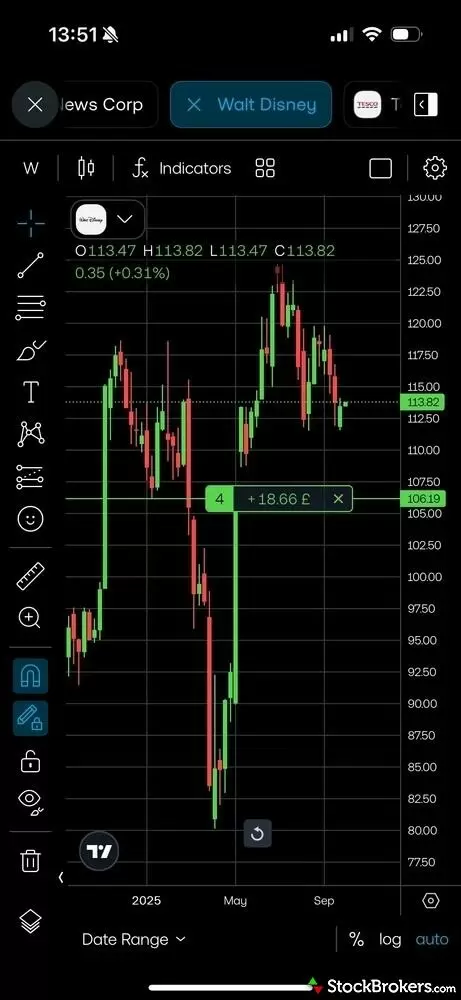
Trading 212 offers many ways to customise a chart on its mobile app. You can add notes, compare historical performance and change the layout.
Elizabeth's take:
"I found the app fun to use, particularly the demo account with £5,000 of virtual money, which lets you test ideas without risking cash."
Low-cost investing. Trading 212 offers around 14,000 stocks and ETFs, including investment trusts and fractional shares. However, it doesn’t offer mutual funds, bonds, or a SIPP, so retirement-focused investors may need another provider. For straightforward, low-cost share investing, it’s hard to beat.
2. Interactive Investor - Best for flat-fee investing
| Company | Overall Rating | Minimum Deposit | Annual Platform Fee (Funds): £0 - £250,000 | ISA |
 Interactive Investor Interactive Investor
|
|
£1 | £71.88 / £179.88 | Yes |
Interactive Investor (ii) is a strong option for U.K. investors who like cost transparency and don’t want platform fees rising as their portfolio grows. Instead of percentage-based charges, ii uses a monthly subscription model, which can work especially well for long-term ISA and SIPP investors with medium-to-large balances.
One account, lots of investment choice. You can hold a Trading Account, Stocks and Shares ISA, Junior ISA, and SIPP under the same plan and manage everything with one login. Investment choice is one of ii’s biggest strengths too, with access to a broad mix of U.K. and international shares, ETFs, funds, investment trusts, and bonds.
An excellent website for research. ii’s web platform is where it really stands out. It’s packed with tools for exploring investments, building watchlists, and digging into performance. There’s also a strong “guided” layer for decision-making, including curated lists like Super 60 and sustainable options, plus model portfolios if you’d rather not pick everything from scratch.
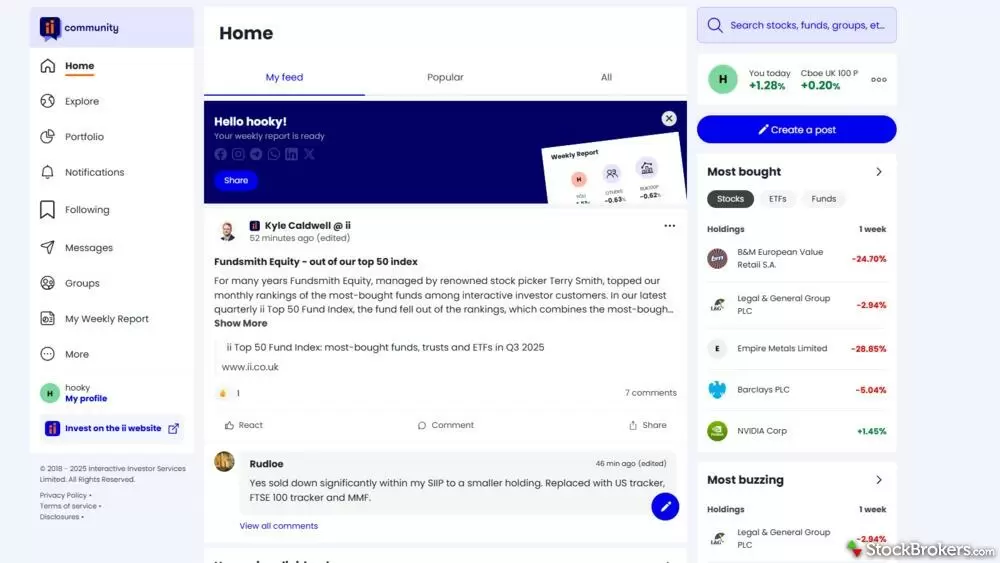
Interactive Investor's community hub provides a space for investors to discuss markets and compare strategies.
Fees. The Core plan starts at £5.99 per month (covering portfolios up to £100,000), with Plus (£14.99) and Premium (£39.99) offering lower trading and FX fees and extra perks. Regular monthly investing can reduce dealing costs, which helps if you’re building steadily over time. For very small or rarely used accounts, a no-subscription platform may still work out cheaper, but for engaged investors who value research and predictability, ii is a great fit.
3. IG - Best for commission-free share trading
| Company | Overall Rating | Minimum Deposit | Annual Platform Fee (Funds): £0 - £250,000 | ISA |
 IG IG
|
|
£0 | N/A | Yes |
IG works for people who want more than a simple “buy and hold” app. You get a deep investment line-up, strong market tools, and some of the best education of any U.K. broker, so it suits investors who like to research, place trades, and keep an eye on what’s moving.
Ways to invest, plus ready-made options. With IG you can open a general investment account, a Stocks and Shares ISA, or a SIPP. You can trade thousands of U.K. and international shares, ETFs, and investment trusts, and there’s also the option to use IG Smart Portfolios if you’d rather invest in a managed, diversified ETF portfolio based on your risk level. IG doesn’t offer mutual funds, and there’s no demo account for share dealing (though there is one for spread betting and CFDs).
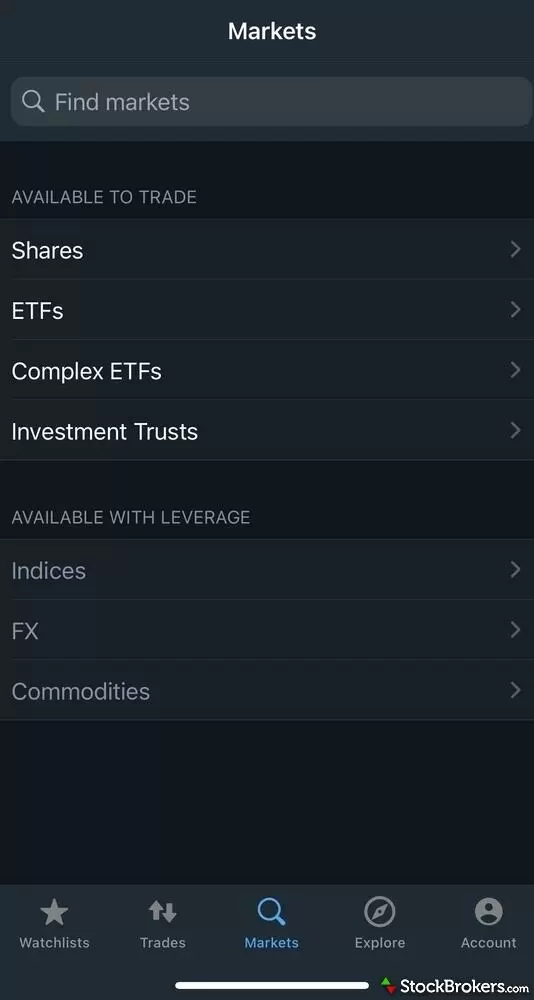
Through the IG Invest app you can invest in crypto, shares and ETFs. You can also specify the investments you want when setting up your account.
Low dealing costs. IG offers £0 commission on U.K. and U.S. share trades, with a 0.7% FX fee when you buy overseas shares. The main catch is the custody fee: if you make fewer than three trades per quarter, you’ll pay £8 per month (charged quarterly). That fee is waived if you trade at least three times per quarter or if you hold £15,000+ in an IG Smart Portfolio, so IG tends to work best when you’re an active trader.
Two apps. The main IG Trading app is packed with watchlists, alerts, screeners, and market news, and it’s a strong choice if you’re making regular decisions. If you want a calmer starting point, IG Invest is the simpler alternative app, with a cleaner interface and bite-sized lessons that explain investing basics for beginner traders.
4. InvestEngine - Best for low-cost ETF investing
| Company | Overall Rating | Minimum Deposit | Annual Platform Fee (Funds): £0 - £250,000 | ISA |
 InvestEngine InvestEngine
|
|
£100 | N/A | Yes |
InvestEngine is best suited to “buy and hold” investing, where you’re happy to build a diversified ETF portfolio and leave it to grow over time. It’s not designed for active traders, since trades are typically executed once per day rather than instantly.
Simple account options, with ETFs only. You can invest through a general account, Stocks and Shares ISA, or SIPP, and it also offers a Business Investment Account for limited companies. The investment range is focused on ETFs (800+), with helpful filters for regions, sectors, and themes. A standout feature is the ability to create multiple, named investment pots to separate goals.
Very low fees, with a few trade-offs. DIY portfolios have no platform fee and no dealing commission (you only pay the ETF’s ongoing charge). Managed portfolios cost 0.25% per year when available. Uninvested cash doesn’t earn interest, and transfers out must be made in cash.
5. Interactive Brokers - Best for investment tools and research
| Company | Overall Rating | Minimum Deposit | Annual Platform Fee (Funds): £0 - £250,000 | ISA |
 Interactive Brokers Interactive Brokers
|
|
£0 | £0 | Yes |
Interactive Brokers (IBKR) works for experienced investors who want institutional-grade tools and access to more than 90 global exchanges. You can invest in shares, ETFs, bonds, investment trusts, and over 14,000 mutual funds with no dealing or platform fees, making it one of the broadest offerings in the U.K.
Powerful research tools. IBKR offers a general account, ISA, and Junior ISA, plus access to SIPPs via third-party providers. Its research hub includes in-depth fundamentals, analyst ratings, ESG data, advanced screeners, and up to 50 custom watchlists. IBKR also offers a free demo account that lets you explore the full platform before investing real money.
Low trading fees. U.K. shares and ETFs cost £3 per trade, and U.S. shares start from $1. ISAs carry a £3 monthly activity fee unless covered by trading commissions. While pricing is competitive, the platform can feel complex for beginners.
Popular Guides
Popular Retirement Guides
- Best Cash ISA Accounts & Rates for 2026
- The Complete Guide to SIPPs in the UK
- How to Open a Stocks and Shares ISA
- Best SIPP Providers of 2026
- Best Lifetime ISAs of 2026
- The Complete Guide to ISAs in the UK
- Best Stocks and Shares ISAs for 2026
- Best Junior SIPPs for 2026
Popular Stock Broker Reviews
- Hargreaves Lansdown Review
- AJ Bell Review
- Fidelity UK Review
- Interactive Investor Review
- Trading 212 Review
- Halifax Share Dealing Review
- CMC Invest Review
- Saxo Review
- Barclays Smart Investor Review
- Lloyds Bank Investing Review
- Interactive Brokers UK Review
- Freetrade Review
- Capital.com Review
- eToro UK Review
- Vanguard UK Review
- IG Trading Review 2026
- XTB UK Review
About the Editorial Team
Elizabeth Anderson, lead writer and researcher, has been a financial journalist for more than a decade. In addition to her work with UK.StockBrokers.com, she has written extensively for major publications including BBC, The Times and Bloomberg. A keen investor herself, she is passionate about helping people understand finance and investing.

Joey Shadeck is a Content Strategist and Research Analyst for UK.StockBrokers.com. He holds dual degrees in Finance and Marketing from Oakland University, and has been an active trader and investor for close to ten years. An industry veteran, Joey obtains and verifies data, conducts research, and analyzes and validates our content.

Jeff Anberg is a Senior Editor at UK.StockBrokers.com. Along with years of experience in media distribution at a global newsroom, Jeff has a versatile knowledge base encompassing the technology and financial markets. He is a long-time active investor and engages in research on emerging markets like cryptocurrency. Jeff holds a Bachelor’s Degree in English Literature with a minor in Philosophy from San Francisco State University.